
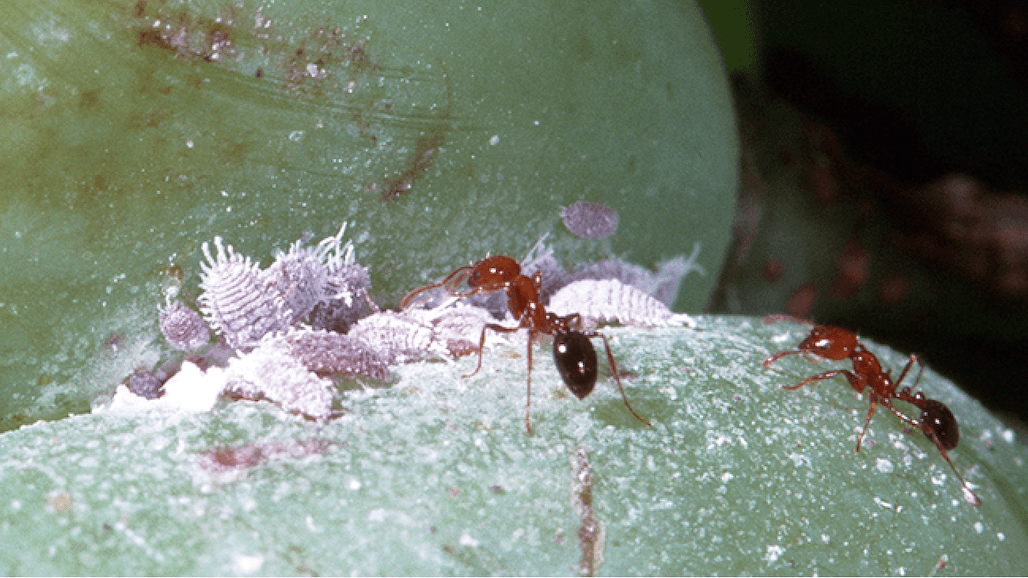
Vine mealybug (Planococcus ficus) has become one of the most economically damaging pests in California vineyards. Left unmanaged, infestations can reduce yield, weaken vines, lower sugar content and spread viruses like leafroll, which contribute to sudden grapevine collapse.
The good news is effective control is possible with the right timing and integrated approach.
In this guide, we break down proven strategies used by California growers to control vine mealybug based on field insights and expert interviews featured on the California Ag Network channel.
What is Vine Mealybug?
Vine mealybug is a small, sap-feeding insect that:
· Hides under bark, in clusters and on roots
· Produces sticky honeydew that attracts ants and encourages sooty mold
· Reproduces rapidly in warm climates like California’s Central Valley
Advertisement
Why it’s so dangerous?
· Multiple generations per year.
· Protected hiding spots make detection more difficult and contact sprays less effective.
· Can vector or spread various vineyard diseases like grapevine leafroll disease and others.
Signs of Vine Mealybug infestation
· White, cottony masses under bark or on clusters
· Sticky residue (honeydew) on leaves and fruit
· Black sooty mold developing on vines
· Increased ant activity (ants protect mealybugs)
Advertisement
Ant presence is often your first indicator of vine mealybug. If you have ants in your vineyard, you probably have vine mealybug.
So, you’ve scouted your vineyard and found vine mealybug: what next?
Integrated Vine Mealybug Control Strategy
The most effective approach combines timing, chemistry, biology and monitoring.
· Dormant and early season control
· Growth stage foliar sprays
· Biological control (natural enemies)
· Ant control
Advertisement
· Monitoring and timing
Dormant & Early Season Control
Prevention is the best medicine. An insecticide spray during late dormancy or at bloom is usually enough to control their population all season long for milder infestations. There is a lot that goes into determining which chemistries to use such as soil conditions and specific regional climates. The UC Cooperative extension also recommends considering other pests in your treatment in strictly preventative situations. Broad spectrum pesticides can take care of more problems than just vine mealybug and reduce the number of passes through the vineyard. Be aware, however, that broad spectrum insecticides can also reduce beneficial insect populations so be sure to consult your Pest Control Advisor for the best dormancy and bloom treatments.
Other helpful strategies include:
· Remove loose bark to expose hiding populations
· Apply delayed dormant insecticides if the pressure is high
This stage is critical because you’re targeting populations before they explode
In-Season Chemical Control
While the vine mealybugs are developing, it’s essential to use systemic insecticides applied through drip irrigation where possible for the deepest control. Contact insecticides and foliar systemic sprays can contribute to control as well. The crawler stage is when they are most vulnerable so be sure to target early season.
Advertisement
Biological Control
Beneficial insects play a critical role in long -term suppression
· Parasitic wasps
· Mealybug destroyer
It’s important to avoid broad spectrum sprays that kill beneficials, so be sure to consult your pest control adviser for the best in-season treatments.
Ant Control
Ant control is critical in managing growing vine mealybug infestations as ants will protect them in exchange for their honeydew. Without controlling ants, your biological control strategy becomes less effective, and infestations can spread more quickly. To control ants, you can:
· Setup bait stations
· Apply sticky trunk barriers
Advertisement
· Apply targeted insecticides
Monitoring and Timing
Monitoring populations is essential as it allows you to time sprays effectively and reduce unnecessary applications thus improving ROI on inputs. Understanding the movements and stages of the infestation is essential for effective control. Growers often use a combination of pheromone traps and visual scouting under the bark to detect and track vine-mealybugs.
Key Takeaways for Growers
· Vine mealybug requires year-round management.
· Timing of control methods is everything.
· Combine chemical control, biological control, and ant management strategies.
· Monitoring tools dramatically improve effectiveness.
Vine mealybug is not a one-time fix; it’s a management system. Growers seeing the best results stay proactive, use integrated strategies and adjust based on monitoring data.
Advertisement