
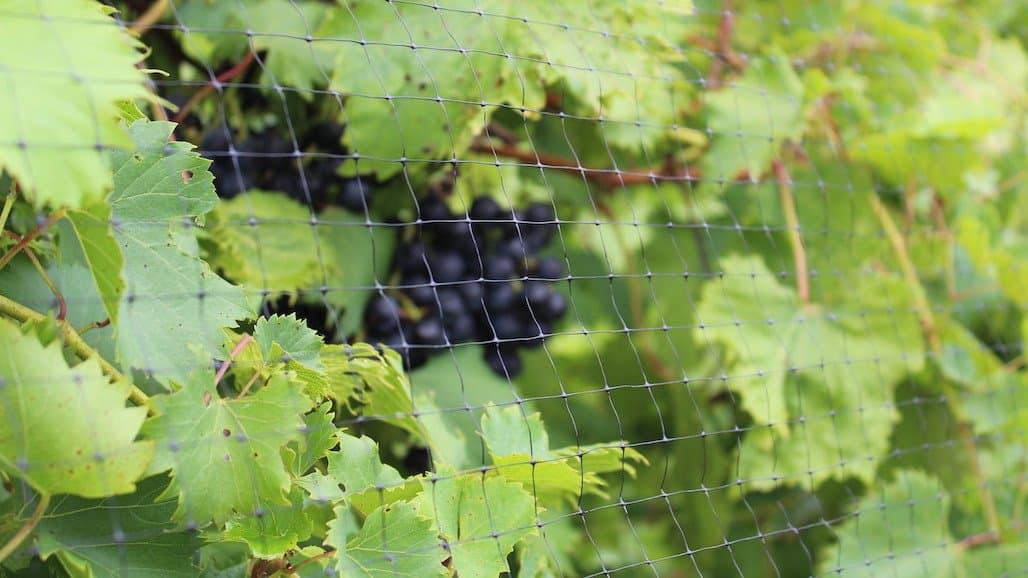
Bird management in vineyards is an expensive and time consuming process that is necessary to maintain a full harvest. Bird pressure changes depending on a vineyard’s location and how close it is to a forest edge. Other variations that contribute to bird pressure include seasonal trends and weather conditions, which grape varieties are being grown, and which species of birds are present (i.e., not all bird species eat grapes). There are a number of different methods to keep birds from damaging grape clusters, many of which can be installed around veraison or closer to harvest time.

Bird netting
Using nets as a physical barrier to block birds from reaching fruit clusters is still considered the most effective and reliable way to prevent bird damage. The most common mesh sizes for bird netting range from ½-¾ of an inch, which is much larger than the hail netting recommended for hail and insect exclusion in apples. Some netting types are more rigid than others. Black plastic netting tends to be more rigid, while white or green knit drape netting is usually more flexible. The type of netting material used and the netting width changes how it is applied and how it can be stored. Before applying bird netting, growers should aim to finish any canopy management needed, such as hedging or skirting.
Note: No matter which type of netting you choose to install, remember to wear buttonless shirts during its installation, which can be a frustrating experience as netting holes can frequently catch buttons.

Plastic mesh netting
Depending on its width, black plastic netting can either be installed over the top of a canopy and clipped underneath the vines, or applied as two separate half nets, one for each row side. Because of how rigid this type of netting is, it does not bunch well and is usually wound up for storage. For vineyards that have rows with different lengths, organizing this type of netting with clear labels indicating net/row lengths will save time when installing netting the following year.
Advertisement
Knit drape netting
Knit drape netting is usually made from yarn or high density polyethylene. It tends to bunch much easier than plastic mesh netting. This allows for it to be stored in bunches and applied with netting mechanisms like a Netter Getter, or home made options that pipe the netting through a tube, after which point the netting is stretched over the top of vineyard rows and clipped underneath the vines to keep it in place.
Additional bird deterrent options
A number of innovative options have been developed to deter birds as an alternative to netting. These include bird distress calls, predator recordings, and cannons, which all use sounds to alarm and confuse birds. Additionally, visual deterrents—often shiny, or mimicking the appearance of predatory birds—also exist and can be hung up around the vineyard to scare birds. These techniques require much less labor to install, and can be moderately effective at deterring birds, especially when bird pressure is low for a given vineyard; however, birds can eventually acclimate to some of these methods, making them less effective over time. Finally, the most recent technology that has been adopted in vineyards for bird deterrence are lasers, sometimes referred to as “laser scarecrows,” as well as drone technology. – By Madeline Wimmer- UMN Fruit Production Extension Educator
Additional reading:
Comparing bird management tactics for vineyards and berry crops (University of Minnesota Extension publication)
Article By
Madeline Wimmer
Fruit Production Extension Educator, University of Minnesota Extension
Madeline Wimmer is a fruit production extension educator with University of Minnesota Extension, based at the regional office in Rochester, where she works with growers across the state on apples, grapes, honeyberries and strawberries. She studied at the University of Wisconsin-Madison, working with cold-climate wine grapes during her graduate years, and has worked in vineyards in Wisconsin and Missouri. Her programming focuses on building the confidence of new growers producing fruit in Minnesota conditions.