
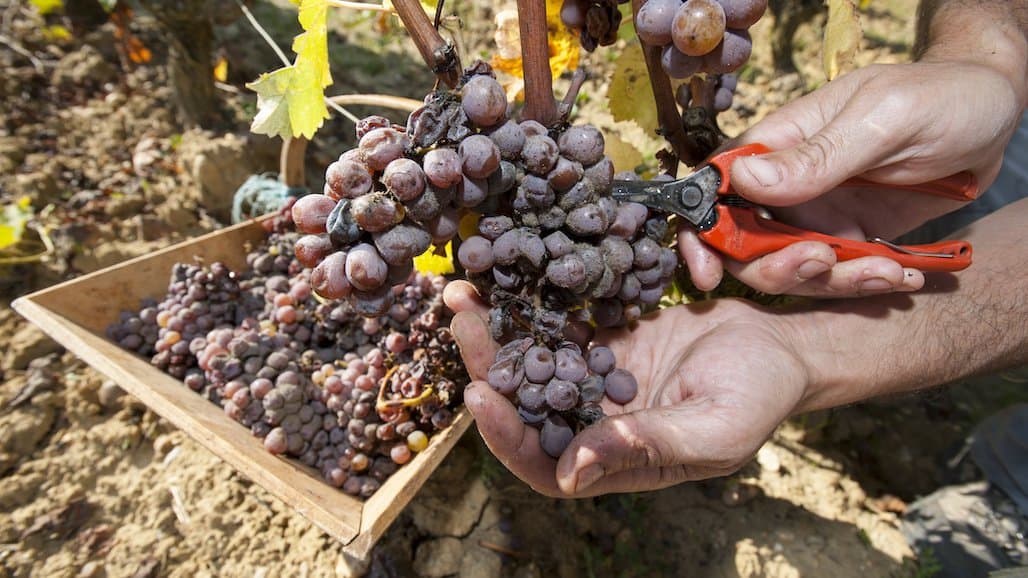
Many East Coast vineyards are approaching or already within 30 days of the anticipated harvest date for early wine grape varieties. During this window, grape berries are becoming very susceptible to a variety of late-season rots, such as ripe rot, sour rot, Botrytis bunch rot, and other “secondary-fungi” associated with skin injuries or berry splitting. In addition, continue to be vigilant with downy mildew (DM) management through harvest. While grape berries should have acquired resistance to Powdery Mildew (PM), leaves (especially younger), remain susceptible. Read this article by Joseph Fiola and Mengjun Hu from the University of Maryland Extension for direction on navigating late season disease management.
General Guidelines
- In general, it is best to avoid applying fungicides containing sulfur, copper, and captan within 30–45 days of your anticipated harvest date. Although most residual should be gone by harvest, sulfur and copper may impart off-flavors to wine, and captan residues may delay fermentation.
- In managing DM and PM, your objective should be to maintain a functional canopy through harvest.
- With white cultivars, you may be able to stop spraying for DM and PM before harvest and tolerate some foliar mildew without harming fruit.
- With red cultivars that need to hang on the vine to mature, you may need to apply fungicides until quite late in the season to preserve the canopy, especially for DM.
- Be vigilant in scouting for late-season bunch rots, which often appear suddenly and close to fruit maturity.
Downy Mildew
- High and moderate frequencies of resistance to FRAC 11 (e.g.Pristine) and FRAC 40 (e.g. Revus) have been detected in DM pathogen in the region, respectively. Some DM strains have also shown tolerance to phosphorous acid product (phosphite) such as Phostrol, ProPhyt, etc.under lab conditions. In contrast, no resistance detected to FRAC 4 (e.g. Ridomil Gold Copper). Resistance risk to FRAC 21 (i.e. Ranman) is unknown. Use of those fungicides need to be minimized for improved resistance management. See more notes under Downy Mildew Management.
Powdery Mildew
- Late PM fungicides that will not affect wine quality include Quintec (FRAC 13), Vivando (FRAC 50), Torino (U6), and various DMI fungicides (FRAC 3).
- Some SDHIs (FRAC 7) such as Aprovia, Kenja, and Endura are also effective PM.
- If you have active PM on clusters, the above-mentioned fungicides may have limited efficacy. In general, early season, between pre-bloom to 4 weeks postbloom, is the critical window to prevent clusters from PM infections. Once PM has developed and occurred on clusters, it becomes very difficult to manage.
Late-Season Bunch Rots
- Botrytis Bunch Rot
- Preharvest can be a critical time for Botrytis control on bunch rot-prone cultivars,especially in wet seasons. Latent infections that occurred during bloom can become active, and berries become increasingly susceptible to infection after veraison. (See more notes, including spray options and fungicide resistance management, under the TimelyVit on Disease Management – Botrytis.
- Ripe rot, caused by species within the genus of Colletotrichum, has been on the rise in recent years.
- The disease is favored by wet and warm weather conditions immediately post veraison.
- Late-season, between post veraison to harvest, is the critical window to spray for ripe rot. The following fungicides are recommended:
- Captan (FRAC M4)
- Fludioxonil (FRAC12; the a.i. in Switch or Miravis Prime)
- Benzovindiflupyr (FRAC 7, the a.i. in Aprovia or Aprovia Top)
- Difenoconazole, Tebuconazole, Metconazole (FRAC 3, exist in various products).
- The current understanding of sour rot is that it is caused by a complex of fungi, bacteria, and insects, thus, management of sour rot involves controlling both the microbes and the Drosophila fruit flies.
- Susceptibility is very cultivar specific and development begins at approximately 15°Brix. Weekly application of insecticides (e.g., Mustang Max) and antimicrobial materials (e.g., Oxidate) when berries reach 15° Brix have shown good efficacy for management. In addition, trials conducted in Michigan also showed good control with Switch or ProBlad (previously known as Fracture), when combined with Entrust. Both ProBlad and Entrust are on the OMRI list. However, due to the risk of pesticide resistance development, this is only recommended on the most susceptible cultivars (history at location) when conditions are conducive for rot development.
Advertisement
- Symptoms closely resemble black rot, phomopsis, and ripe rot. Fungicides including strobilurins (FRAC 11), thiophanate methyl (FRAC 1), captan, and ziram are recommended for bitter rot control.
- Watch for other late-season rots as fruit ripen, especially if there has been damage from hail, birds, insects, or PM on fruit, as wounds serve as entry points that facilitate infections by various fungi.
- Be careful not to injure ripening fruit while spraying, mowing, or leaf pulling, and control insects, birds, etc. that cause damage to the fruit as part of an overall management program.