
Successful vineyard pest management during the cropping and harvest season relies on proactive identification and suppression of insect pests that can jeopardize grape quality, worker safety, and long-term vine health. Certain pest species, including social wasps, scale insects such as mealybugs, leafhoppers, and spotted-wing drosophila (SWD), present recurring challenges to vineyard operations. These threats are influenced by seasonal conditions, vineyard microclimates, and cultural practices. Without appropriate monitoring and control, pest outbreaks can lead to substantial losses in yield and market value, as well as increased management costs.
It is critical that growers and vineyard managers take a strategic approach to pest control, integrating early-season prevention, routine monitoring, and targeted interventions. Effective pest suppression not only protects the current season’s crop, but also supports the long-term sustainability of vineyard ecosystems by preserving beneficial insect populations and reducing resistance pressure on pesticides.
1. Social Wasps
Social wasps, including yellow- jackets, play a dual role in vineyards. For much of the year, they act as beneficial predators, feeding on a variety of plant-feeding insects and caterpillars. However, as the season progresses into late summer and early fall, their behavior may cause challenges, as populations are at their peak during grape ripening and harvest when human-wasp encounters are most likely to occur. Nests may be found both above and below ground, sometimes in the trellis system or vineyard infrastructure.
The best way to manage potentially hazardous vineyard conditions is to prevent the buildup of populations of social wasps that could cause problems. Social wasps start building nests and collecting food during spring. Queens will start laying eggs and workers hatch by June. During this stage, the queen can exclusively lay eggs while worker wasps bring food to the nest (Figure 1). It is essential to control queen wasps before workers leave the nest during the early season, by placing commercially available traps. Disturbing a nest can provoke a strong defensive response, as yellowjackets release an alarm pheromone that mobilizes the entire colony to attack. Stings can cause pain, swelling, and in severe cases, life-threatening allergic reactions such as anaphylaxis. Vineyard workers should be trained to recognize signs of wasp activity and to respond appropriately to stings, including knowing when to seek immediate medical attention.

Management considerations:
Advertisement
• Deploy commercial wasp traps in early spring to capture queens before colony establishment. Conduct regular inspections of trellis posts, irrigation lines, and vineyard edges for nest sites.
• Hire professionals for nest removal, especially once workers have emerged and nests are active.
• Schedule nest removal during cooler morning hours when wasps are less active and aggressive.
2. Leafhoppers
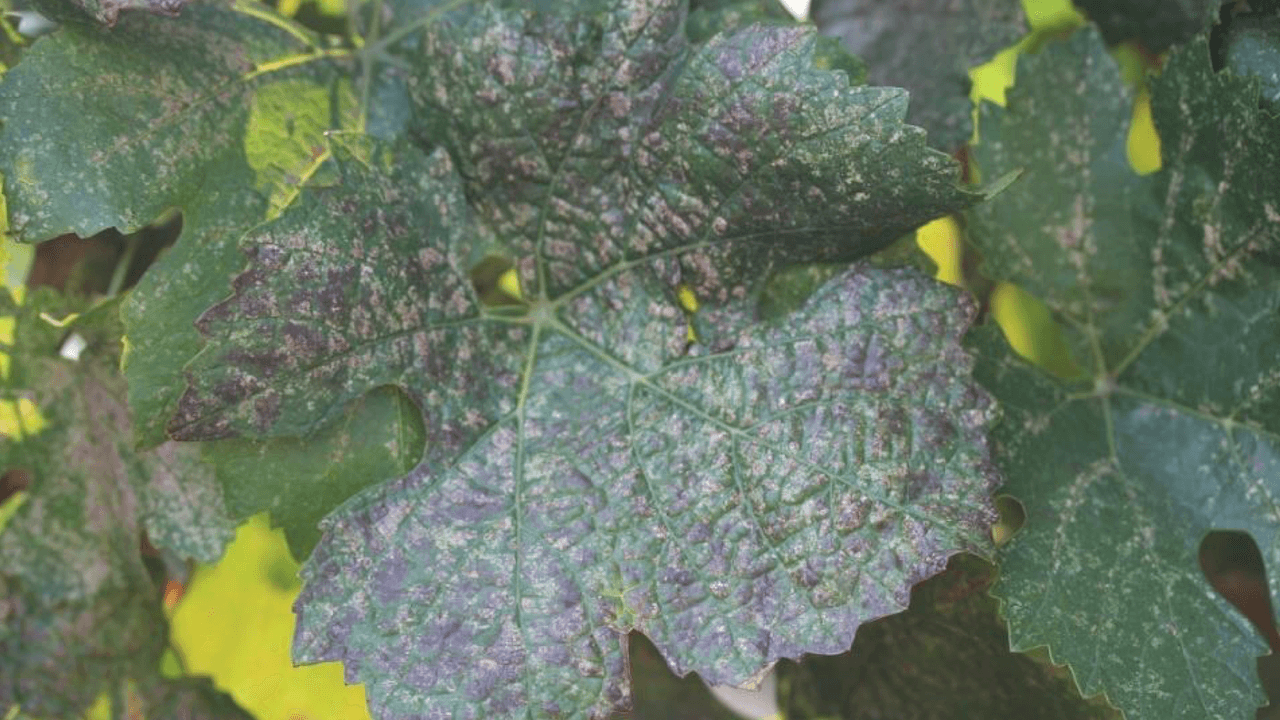
Leafhoppers are small, mobile insects that feed on the underside of grape leaves, extracting sap and leaving behind chlorotic stippling (Figure 2). High leafhopper populations can severely impair photosynthesis by damaging leaf tissues, which can in turn reduce sugar accumulation in grapes and compromise fruit quality. Hot and dry conditions favor leafhopper outbreaks, making this pest particularly challenging in arid winegrowing regions. Leafhoppers may also act as vectors for disease in certain regions. Often, when pesticide sprays are overused, natural enemies are killed, resulting in secondary pest outbreaks. Growers should use integrated pest management (IPM) principles, relying on biological control agents such as parasitoid wasps and predatory bugs to suppress populations naturally when possible.
Management considerations:
• Begin scouting in early summer and continue through veraison, using yellow sticky cards or visual inspections.
Advertisement
• Use kaolin-based clay sprays to deter feeding and oviposition; reapply as needed after rainfall.
• Apply conventional insecticides judiciously and rotate active ingredients to reduce resistance.
• Avoid broad-spectrum sprays that eliminate beneficial insects and disrupt ecological balance.
3. Mealybugs (Planococcus, Pseudococcus spp.)
Mealybugs are cryptic, soft-bodied insects that secrete waxy coatings and honeydew as they feed on grapevine phloem. Their presence is often masked by the protective covering and clustering in sheltered areas, such as under bark or near the base of canes. The sticky honeydew they excrete promotes the growth of sooty mold and attracts ants, which in turn protect the mealybugs from natural enemies. More importantly, mealybugs are primary vectors of grapevine leafroll-associated viruses, making their control critical to vineyard longevity and wine quality.
Management considerations:
• Place pheromone-baited traps in spring to detect the presence of male mealybugs and assess flight periods (Figure 3).
Advertisement
• Inspect clusters, trunk bases, and cordons for signs of infestation, honeydew, or sooty mold.
• Manage ants using bait stations to reduce protection of mealybug colonies.
• Apply selective insecticides as spot treatments based on monitoring data.
• Harvest clean blocks first and sanitize equipment to avoid virus spread.

4. Spotted-Wing Drosophila (SWD)
SWD (Drosophila suzukii) is a fruit fly capable of ovipositing in ripening grapes if berry skins are damaged or weakened by rain, cracking, or mechanical injury. Unlike other vinegar flies, SWD females possess a serrated ovipositor that allows them to lay eggs in intact fruit. This pest becomes most active during late summer and is exacerbated by rainy or humid conditions that compromise berry integrity. SWD larvae can rapidly degrade berry quality, introducing spoilage bacteria and acetic acid-producing yeasts that lead to sour rot (Figure 4). Infestations are most severe on vineyard edges and in shaded clusters where microclimates remain humid.
Advertisement

Management considerations must be rapid and precise to avoid economic loss during the narrow
harvest window.
• Scout frequently after rainfall; inspect damaged clusters, especially in shaded or edge zones.
• Use zero pre-harvest interval behavior-modifying products that deter SWD adults from landing and laying eggs.
• Incorporate drone-applied Attract-and-Kill technology for fast, efficient area-wide suppression.
• Harvest infested areas quickly and remove fallen fruit to reduce breeding sites.
Advertisement
5. Biosecurity and Access Management
A comprehensive biosecurity plan is essential to prevent the introduction and spread of insect pests between vineyard blocks, properties, or regions. Human activity, contaminated tools, and shared equipment are common pathways for pest movement. By implementing rigorous sanitation and inspection protocols, vineyard managers can reduce the likelihood of costly infestations and protect vine health year over year.
Management considerations
• Limit vineyard access to essential personnel during key growing and harvest stages.
• Disinfect pruning tools, bins, and machinery before use in new blocks or after servicing other properties.
• Inspect incoming vehicles and trailers for signs of insect contamination or unclean surfaces.
• Train all workers and contractors on biosecurity expectations and pest identification.
Advertisement
Conclusion
Vineyard pest management is most effective when it combines prevention, monitoring, and responsive treatment. Social wasps, mealybugs, leafhoppers, and SWD each pose unique risks that can vary based on local conditions and timing. Applying integrated pest management techniques, leveraging technological advancements like drones, and maintaining strict biosecurity will help ensure high-quality grape production while supporting long-term ecological and economic sustainability. The best outcomes arise from informed decision-making, continuous learning, and collaboration across viticulture teams, pest control professionals, and agricultural advisors. — By Dr. Vaughn M. Walton, Professor, Horticultural Entomologist, Department of Horticulture, OSU; Dr. Kyoo Rok Park, Research Associate, Department of Horticulture, Oregon State University