
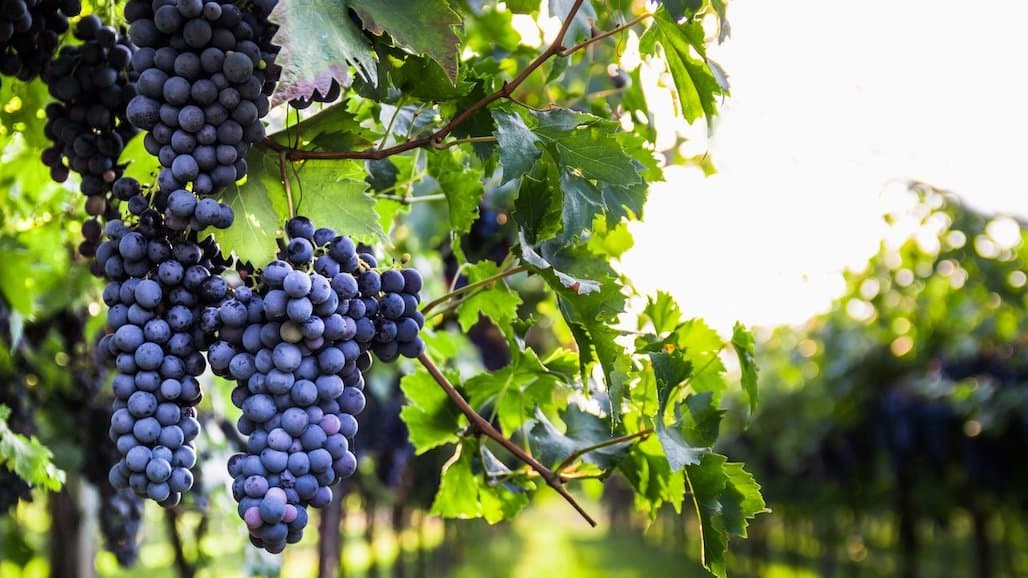
A mature grape-growing region is not simply a place where grapes are grown successfully. It is a region where growers, wineries, researchers, institutions and markets have learned to connect wine quality to place. Scientifically, this means demonstrating repeatable relationships among climate, soil, topography, plant material, vineyard management, vine physiology, fruit composition, wine characteristics and economic performance.
This perspective is consistent with the definition of terroir adopted by the International Organization of Vine and Wine. The OIV definition includes not only the physical and biological environment, but also the “collective knowledge” associated with “applied vitivinicultural practices.” Terroir is therefore not a fixed property of soil, climate or geology. It is the result of interactions between a place, the vines planted there, and the technical decisions developed through repeated observation. Several scientific studies in the last 20 years described terroir as an interactive system involving climate, soil, cultivar and human practices. They emphasized that successful terroir expression depends on matching the phenological cycle of the cultivar with local environmental conditions so that ripening occurs within the appropriate part of the growing season. This principle is directly relevant for Michigan. A cultivar is not appropriate simply because it is internationally recognized, commercially attractive, cold hardy or successful elsewhere. It is appropriate when it can consistently produce quality fruit, achieve the maturity required for a defined wine style and provide an economically sustainable return.
Learning from the World, Defining Michigan
The world’s mature wine regions followed different pathways. Burgundy developed a parcel-based culture centered on climates. The Langhe built its identity through Nebbiolo, vineyard consciousness, denomination rules and accumulated grower knowledge. California accelerated its development through research, Extension, innovation, private investment and land protection. Michigan does not need to copy any of these systems. The important lesson is that regional reputation becomes durable only when place, quality, technical discipline and collective memory are connected.
Michigan has moved beyond the early experimental phase. The next step is not simply to plant more grapes, promote more wineries or compare Michigan with famous regions elsewhere. The next step is to become more precise. This transition is particularly urgent because the global wine sector is experiencing declining consumption in many markets, changing consumer behavior, production surpluses in some categories, increasing costs and growing climatic instability. The global wine market is facing a striking contradiction: there is more high-quality wine available than ever before, but too few consumers to absorb it. The scale of the imbalance is substantial. Europe’s unsold wine inventory has exceeded the equivalent of an entire year of production, enough wine to fill approximately 8,000 Olympic-sized swimming pools. Australia alone is holding more than 2 billion liters in storage, equivalent to about 859 Olympic-sized swimming pools. These figures show why future success cannot be measured simply by producing more wine or planting more acres. In an oversupplied market, regions must focus on distinctiveness, consistent quality, production discipline and wines that give consumers a clear reason to choose them.
Future success will favor regions that can define their strengths, recognize their limitations and produce wines with clear technical and regional identities. For Michigan, precision means understanding which sites can reliably support Riesling, Chardonnay, Pinot Noir, Cabernet Franc, Pinot Gris, Blaufränkisch or disease-resistant cultivars. It also means identifying which vineyard blocks need redevelopment and which management practices improve fruit quality, vine resilience and profitability rather than simply increasing vine size or short-term yield.
From Cultivar Adoption to Cultivar Discipline
Advertisement
Over the last several decades, Michigan has shifted strongly toward Vitis vinifera and toward a smaller group of core cultivars. Riesling, Chardonnay, Pinot Noir, Pinot Gris and Cabernet Franc now account for most of the state’s wine-grape acreage. This represents a significant transition from broad experimentation toward greater specialization (Figure 1).

This convergence is an important sign of maturation, but acreage concentration alone does not demonstrate cultivar adaptation. Michigan must now move from cultivar adoption to cultivar discipline. The industry needs to determine where each cultivar performs best, which wine styles it should support and which vineyard practices are necessary to produce those wines consistently. For Riesling, this means treating the cultivar not simply as a reliable white grape, but as a potential flagship for Michigan’s cool-climate identity. Its regional value depends on the consistent expression of acidity, aromatic precision, freshness and site transparency. These outcomes are influenced by crop load, canopy exposure, disease pressure, harvest timing, fruit health and the relationship between sugar accumulation and acid degradation. For Pinot Noir, the strategy must be selective. The cultivar is internationally recognized and compatible with Michigan’s cool-climate image, but it is also highly sensitive to site, disease pressure, crop level, canopy microclimate and vintage conditions. Pinot Noir should not be planted simply because consumers recognize its name. It should be grown where multiple years of evidence indicate that it can achieve fruit health, phenolic maturity, aromatic development and wine quality before fall weather becomes limiting.
Vineyard Management Is Part of Terroir Expression
Michigan terroir cannot be separated from vineyard management. The state has a humid climate, relatively short and variable growing seasons, significant disease pressure and recurrent winter injury. Under these conditions, the same cultivar can produce very different outcomes depending on vine balance, canopy architecture, crop level, rootstock, soil management, disease control and harvest timing. Scientific literature supports the inclusion of vineyard management within terroir. Soil and climate influence wine through their effects on root development, vine water status, nitrogen availability, vegetative growth, phenology, berry development and fruit composition. These effects are then modified by cultivar, rootstock and management.
Direct correlations between soil classification and wine quality are therefore insufficient unless the physiological response of the vine is also measured. Vine balance is particularly important, but the term should not be used only as a visual or subjective description. It represents the relationship among canopy source capacity, reproductive demand, canopy exposure, and the accumulation of perennial reserves. Pruning weight, yield-to-pruning-weight ratio, shoot density, canopy dimensions and exposed leaf area per unit of fruit can all provide useful indicators. Cluster thinning should also be treated as a conditional practice rather than a universal solution. Its effects depend on the initial crop level, canopy capacity, timing of thinning, cultivar, season and vineyard condition. Thinning may improve maturity when a vine is genuinely overcropped, but it may have little benefit when the canopy already has sufficient assimilatory capacity. The objective should be to correct an imbalance, not simply to reduce yield.
Read the full story from the Michigan State University Extension here. — Story by Paolo Sabbatini, MSU Department of Horticulture

Article By
Paolo Sabbatini
Department of Horticulture, Michigan State University
Paolo Sabbatini is a viticulture researcher and extension specialist in the Department of Horticulture at Michigan State University, which he joined in 2007. His work centres on wine and juice grape physiology in Michigan's cool climate - identifying the environmental, physiological and cultural factors that limit vine growth, fruit maturity and quality, and developing canopy management techniques that alter cluster microclimate to reduce disease and improve fruit. He holds a Ph.D. in horticulture from the University of Ancona, Italy.