
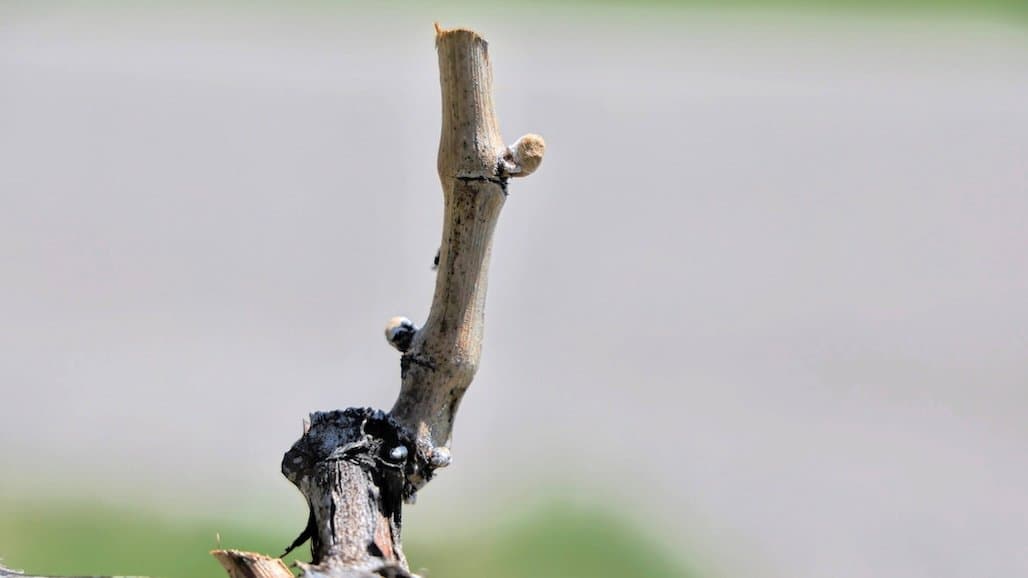
As of May 14th, juice grapes and early hybrid wine grapes are at 4-8 inches of shoot growth in southern Michigan. Clusters are separating from the shoots and beginning to elongate. Early hybrids and vinifera cultivars are between first leaf and 1-inch of growth.
In northern Michigan, most Vitis vinifera are transitioning from late bud swell to early bud break—a key shift from dormancy to active growth triggered by warming temperatures. Bud break, marked by emerging green shoot tips, is a vulnerable stage due to frost risk, which can impact yields. Monitoring forecasts and applying frost protection are essential. Recording bud break also helps guide timely decisions for pest management, fertilization and canopy work. For reference, see MSU Extension’s Grape Growth Stages Chart.

Horticulture
Accurate assessment of vineyard nutrient requirements is essential for optimizing vine health, fruit quality and yield. Implementing soil testing and petiole analysis provides critical data to inform nutrient management strategies. A quality soil test or a previous year’s petiole analysis is important in understanding what nutrients the vineyard needs.
Soil tests evaluate nutrient content, pH levels and other soil characteristics, offering insights into the soil’s fertility and potential nutrient deficiencies. Petiole analysis, which involves testing the leaf of grapevines, directly measures the nutrients absorbed by the plant, providing a more immediate understanding of the vine’s nutritional status. Regular monitoring through these methods allows for timely adjustments to fertilization practices, ensuring optimal nutrient availability throughout the growing season.
During the early stages of vine growth, pay particular attention to the application of nitrogen (N), zinc (Zn) and boron (B), as these nutrients are vital for shoot development and flowering. Potassium (K) and magnesium (Mg) are also important during this period, supporting various physiological processes within the vine.
Advertisement
Nitrogen plays a crucial role in vegetative growth and fruit development. However, its application must be carefully managed:
- Excessive nitrogen: Can lead to delayed flowering and excessive vegetative growth, potentially compromising fruit set and quality.
- Insufficient nitrogen: May result in reduced vine vigor, leading to lower yields and diminished fruit quality.
Therefore, precise nitrogen management, informed by soil and petiole analyses, is essential to balance vegetative growth and fruit production effectively. Shoot thinning will begin in the southern vineyards in the next week or two. Shoot thinning is an important canopy management tool to improve air circulation, minimize disease pressure, reduce shading, and improve spray penetration. The right time for shoot thinning time is when the shoots are 5-12 inches long.
For more comprehensive information on shoot thinning and other early season vineyard management practices, please refer to the article, “Early season vineyard management.”
Diseases
During this time of year, the primary diseases of concern for grape growers are phomopsis, black rot, anthracnose and powdery mildew. If you’re seeking detailed insights into prebloom fungicide options and the effects of rain on disease spread, we recommend referring to previous grape scouting reports or exploring an article on early-season disease management. It’s worth noting that some growers have recently observed isolated cases of downy mildew infections in northern vineyards. Southern vineyards have been seeing early infections of Phomopsis and are beginning to see black rot lesions.
As bloom continues in southwest Michigan, start choosing fungicides that control all the fruit diseases. For example, with downy mildew we are most concerned with fruit infection at this time and sprays should be timed prior to bloom and at bloom for optimal control. Downy mildew is caused by a fungal-like organism, so many site-specific systemic fungicides that target other spring diseases do not work on downy mildew. Effective fungicides for downy mildew include products in FRAC codes 4, 11, 21, 40 and 45 as well as phosphorus acid salts and some biologically-based products.
Advertisement
With the exception of powdery mildew, these spring disease infections typically require rain events. It only takes 0.1 inches of rain above 50 F to trigger a possible infection. Viticultural practices that reduce canopy wetness such as good irrigation timing, leaf removal and good weed management can reduce many of these diseases in a vineyard. Typically, DMIs (FRAC 3), captan and EBDCs (FRAC M3) are effective for phomopsis, black rot and anthracnose.
Insects
First generation grape berry moth larvae have been detected in grape clusters in recent weeks in southwest Michigan. Based on the degree day model for this pest, the start of the second generation egglying is expected in late June/early July in southwest Michigan, proceeding later into July at further north locations. Also, the first sightings of grape tumid gallmaker infestation and the first rose chafers were detected last week in southwest Michigan.
Potato leafhopper has also been found in grape vineyards and is active across the state from recent spring invasion on warm winds from the south. Protect susceptible cultivars, especially in young vineyards where potato leafhopper can stunt shoot growth. Neonicotinoid insecticides such as Assail and Admire Pro can provide protection against potato leafhopper, rose chafer and tumid gallmaker if present in the same vineyard site.
Begin your 2025 scouting, spray planning and auto-recordkeeping with the SAM Tool
One user shared, “It took me only 53 seconds to create the first task, and less than 30 seconds for each one after that.” Imagine the efficiency and simplicity this tool can bring to your daily vineyard operations! The Sustainable Agriculture Management (SAM) Tool now supports both spray and non-spray task management with a more intuitive, user-friendly interface. It’s easy to use and can help you save time and money.
The latest version includes:
Advertisement
- Streamlined task planning
- Easier task duplication and editing
- Improved tracking for both spray and non-spray activities
- Last-minute task changes and timely communication with workers
- A redesigned mobile interface with a clearer layout
- Support for grower participatory research
- Many other management assistant functions
SAM Tool is free to use and developed specifically with Michigan grape growers in mind. We support small growers and large growers. Whether you’re returning to the platform or trying it for the first time, now is the perfect time to explore how it can support your work this growing season.
The SAM Tool team is offering personal Zoom assistance through May 30, 2025, for anyone who would like a walkthrough or help getting started. Visit Sustainable Agriculture Management or email Karen Chou directly at chouk@msu.edu to schedule a time. — By Esmaeil Nasrollahiazar, Mike Reinke, Paolo Sabbatini, Rufus Isaacs, Timothy Miles, Cheyenne Sloan, Derek Plotkowski, Karen Chou and Vahid Rahjoo, Michigan State University Extension