
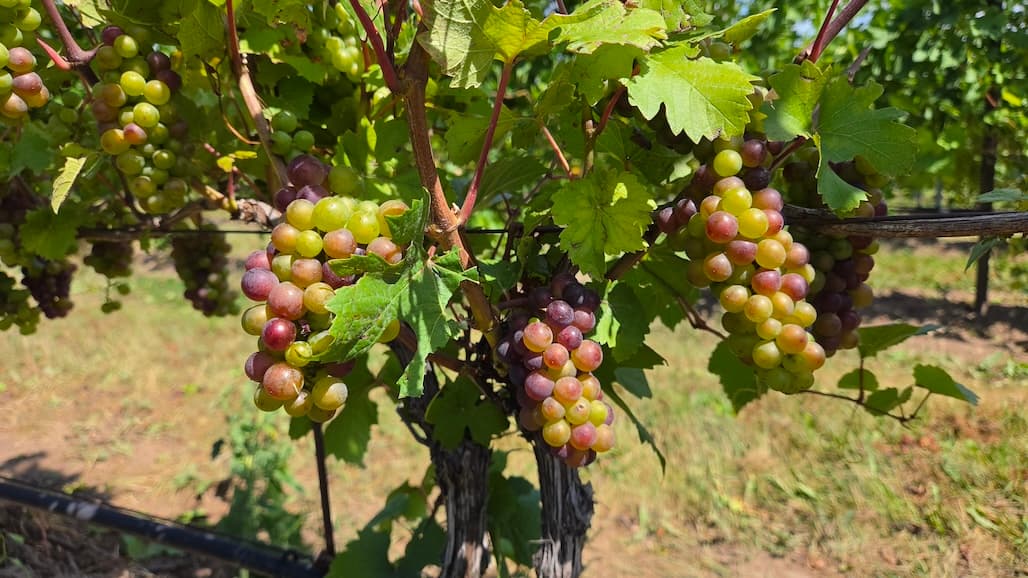
Michigan State University (MSU) released its second grape scouting report for the month of August, showing that harvest has begun in the southwestern part of the state. Early hybrids and some varieties are currently being picked for sparkling wine production. Meanwhile, grapes in the northwest are showing varied, but continued signs of ripening. In the Tip of the Mitt, Vitis vinifera cultivars such as Pinot noir and Zweigelt are beginning to go through veraison. Japanese beetle activity is persistent but should be on the decline. Downy mildew and powdery mildew have been noted in some vineyards. Risk for each remains moderate. For reference, see MSU Extension’s grape growth stages chart.
Viticulture
Two vineyard management practices, pre-veraison leaf removal and cluster thinning, are widely used in Michigan vineyards to improve grape and wine quality, particularly in premium wine production. Each practice can provide benefits on its own, but research from the Michigan State University Department of Horticulture has shown that, when properly timed and combined, they can further improve fruit composition, disease management and overall vine balance.
Pre-Veraison Leaf Removal
Pre-veraison leaf removal involves removing leaves from the fruiting zone before or around the onset of veraison. The primary goals are to increase sunlight exposure and improve air circulation around the clusters. These changes can reduce humidity within the canopy and lower the risk of Botrytis and other bunch rots, particularly in cultivars with compact clusters.
From a physiological perspective, strategic leaf removal can also improve the balance between photosynthetically active leaf area and crop load, supporting more efficient fruit ripening. In trials conducted at the Southwest Michigan Research and Extension Center, researchers observed an average increase of more than 5% in °Brix at harvest compared with untreated vines, along with higher concentrations of anthocyanins, flavonols and other phenolic compounds. These improvements in berry composition can contribute to wines with deeper color, greater aromatic intensity and enhanced mouthfeel.
Cluster Thinning
Cluster thinning, typically performed near veraison, involves removing a portion of the crop to better match yield with the vine’s capacity to ripen fruit. By this stage, berry size and cluster weight are more predictable, allowing growers to make more precise crop-load adjustments.
MSU research has shown that reducing excessive crop load can redirect vine resources toward the remaining clusters, supporting sugar accumulation, color development in red cultivars and more concentrated fruit composition. In cool-climate regions such as Michigan, cluster thinning can also help reduce delayed or uneven ripening, particularly in seasons with variable flowering, fruit set or high crop levels.
The Combined Effect
When pre-veraison leaf removal and cluster thinning are used together, their effects can be complementary. Cool-climate studies with ‘Cabernet Franc’ at the Southwest Michigan Research and Extension Center found that the combined treatment improved fruit uniformity, increased anthocyanin accumulation and advanced ripening more effectively than either practice alone.
Advertisement
In warmer climates, treatment differences may become less pronounced by harvest, although earlier improvements in ripening and cluster health can still be valuable, particularly under high disease pressure. These vineyard responses can also carry through to wine quality, with combined canopy and crop-load management associated with improved color, aromatic intensity and structural characteristics.
The key is to use both practices strategically rather than routinely. Their effectiveness depends on cultivar, vine vigor, crop level, canopy density, seasonal conditions and the desired production goals. Read the full scouting report here.
— Story contributed by Michigan State University Extension