
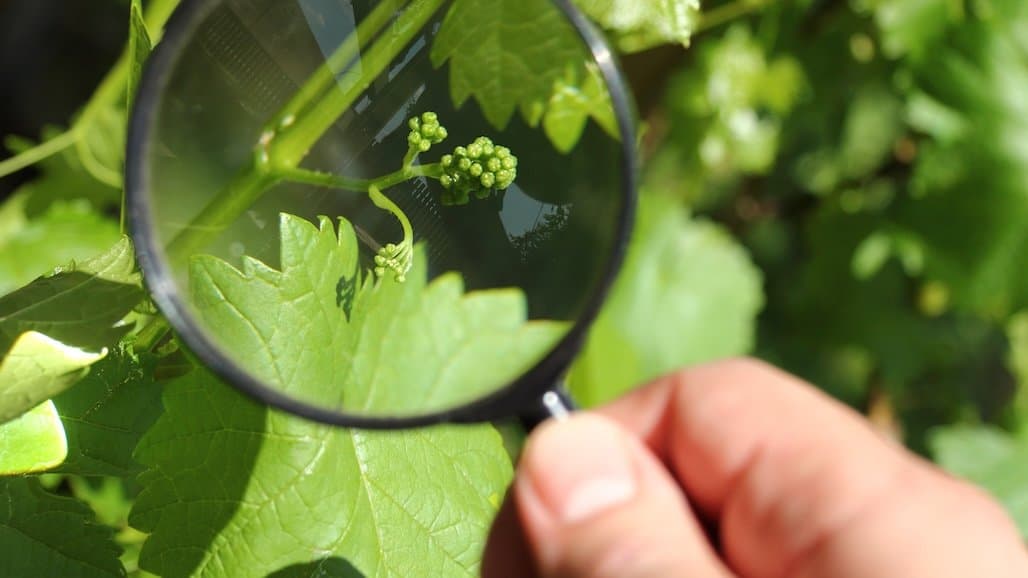
The Cornell Cooperative Extension of Suffolk County released its July Long Island Fruit and Vegetable Update, including the latest on grapes.
According to the LIHREC NEWA weather station, just over three inches of rainfall fell July 5-7. There was a total of 3.5 inches in May and one inch in June. The rain was much needed, though these prolonged periods of wetness bring concerns about fungal disease development.
Pest Management
Conditions are optimal for downy and powdery infections with high humidity, dewy mornings and intermittent rainfall. It is essential to maintain good canopy management coupled with a consistent, effective schedule of protectants and/or if necessary, post-infections products. When infections show up, they must be dealt with sooner rather than later. Under the right conditions, both diseases can spread rapidly to unprotected tissue such as new leaves on laterals and at the top of the canopy. Unlike other fungal diseases, downy has the ability to defoliate vines.
In situations where significant defoliation occurs in the latter half of the season, both fruit ripening and the vines’ ability to overwinter can be compromised. The fuzzy white lesions on the leaf underside readily spew spores. Young berries are susceptible to DM for only four to five weeks while pedicels (berry stems) and leaves are susceptible for a much longer period. Fruit is susceptible to powdery for about the same time frame. Leaves are susceptible to both all season. The full report can be read here — Story contributed by the Cornell Cooperative Extension of Suffolk County