
Loop-mediated isothermal amplification (LAMP) is a relatively new nucleic acid amplification technology where targeted DNA of biological samples are amplified under isothermal conditions. The amplified DNA is then detected by indirect detection methods such as turbidity and non-specific dyes. LAMP surpasses the limitation of expensive thermal cycler requirement of polymerase chain reaction (PCR) based amplification and can be implemented by any individual with relatively short training and simple protocols. Since its discovery, LAMP is used in diagnosis of many human and plant diseases where rapid results, specificity, and low-cost efforts are desired.
In 2019, a team of researchers developed a grapevine red blotch virus (GRBV) specific LAMP assay with a simple protocol for point-of-use detection that is more sensitive, quick, and affordable than tissue extraction. The assay sensitivity was tested in extracted total nucleic acids (TNA) from GRBV infected vines where LAMP outperformed both quantitative polymerase chain reaction (qPCR) and PCR assays in their detectability of manually set nucleic acid concentrations. In the lab-based assays, qPCR and PCR detected the nucleic acid diluted to 10,000 and 100 fold dilutions, respectively, whereas LAMP detected the TNA diluted to 1 million concentration. Furthermore, based on general conversations with current LAMP users for GRBV detection, LAMP’s estimated cost per sample is around $2, whereas PCR or qPCR detection is $30.
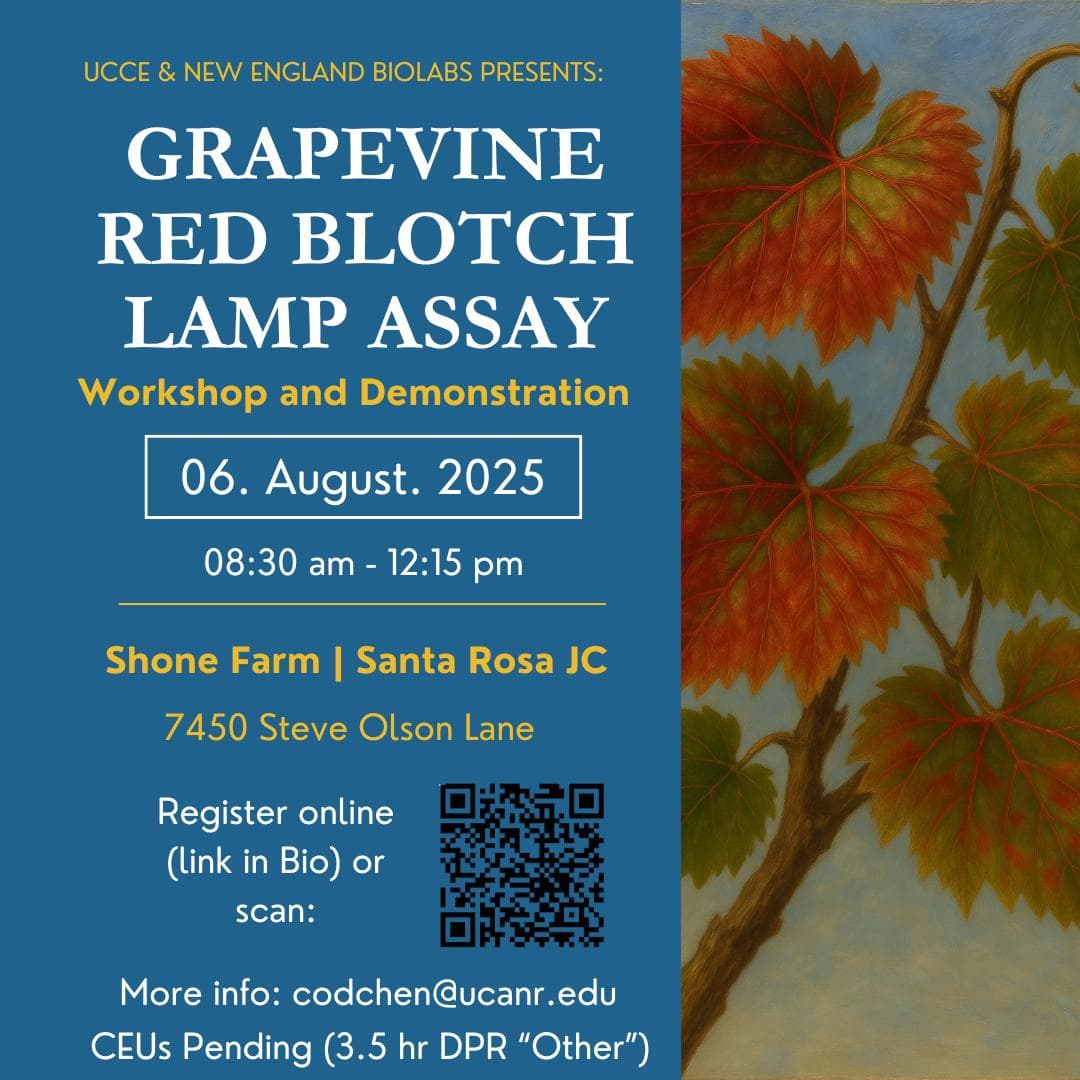
Attend this workshop & demo to learn more about utilizing new LAMP technology for GRBV detection. Register to attend HERE.