
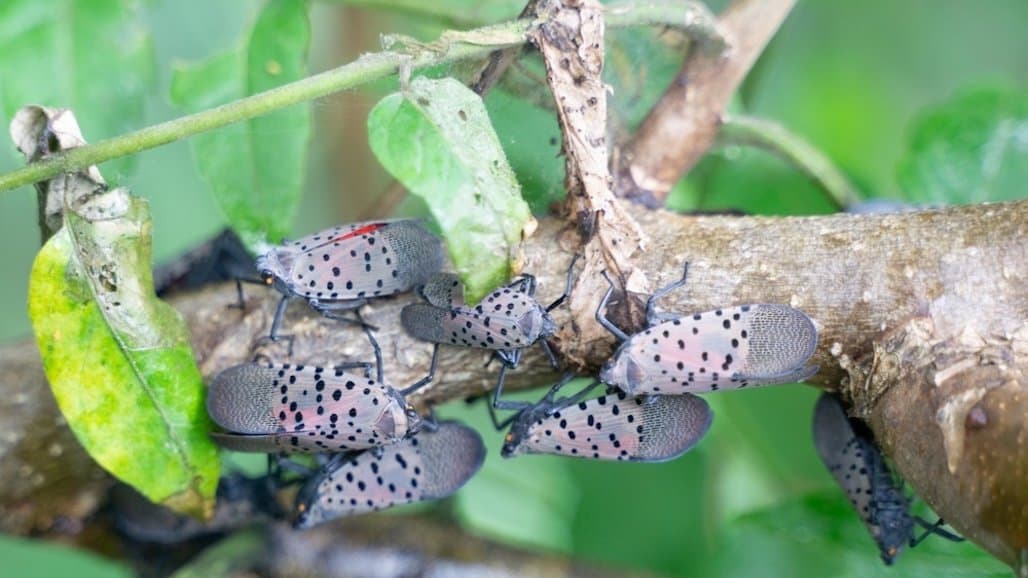
ARS scientists are leading efforts to introduce a specialized parasitic wasp to combat the highly destructive invasive Spotted Lanternfly. Researchers at the Beneficial Insects Introduction Research Unit in Newark, Del., are collaborating with the Animal and Plant Health Inspection Service (APHIS) Forest Pest Methods Laboratory in Buzzards Bay, Mass., to evaluate a specific parasitic wasp for its suitability and potential to control the Spotted Lanternfly population in the United States.
“This parasitic wasp species (Dryinus sinicus) attacks Spotted Lanternfly nymphs—the immature, wingless stage of the insect before it becomes an adult” said Xingeng Wang, ARS research entomologist at the Newark laboratory.
According to Wang, the wasp is the most dominant natural enemy of the Spotted Lanternfly in its most early nymphal stages of life.
“Current results suggest that D. sinicus is a promising biological control agent against the Spotted Lanternfly,” said Wang. “This approach offers several advantages over synthetic pesticides, including reduced control costs, lower risks to human and animal health, and decreased likelihood of pest resistance.”
Wang explained that the Newark research team is assessing how effectively D. sinicus targets Spotted Lanternfly, including ecological factors that might influence its performance. They are also developing rearing methods (techniques for breeding and raising the wasps in laboratory settings), to support future deployment. Reliable rearing techniques are essential to scale up biological control efforts and ensure consistent field application.
The APHIS team is also conducting host specificity testing to ensure the wasp poses no risk to non-target species. This testing helps safeguard native ecosystems and ensures regulatory compliance before any potential release.
Wang added that this ARS research is “critical to environmental health and agricultural security, providing a safer, more sustainable strategy for the area-wide management of Spotted Lanternfly at scale — protecting the productivity and resilience of American agriculture.”
Advertisement
In April 2026, the ARS team published part of their research findings of this biological control agent at: https://academic.oup.com/aesa/article/119/3/206/8650541
Additionally, this research was published in the Entomological Society of America’s news blog “Entomology Today,” at: https://entomologytoday.org/2026/07/02/dryinus-sinicus-potential-natural-enemy-spotted-lanternfly/
— Story by Tami Terella-Faram, ARS Office of Communications