
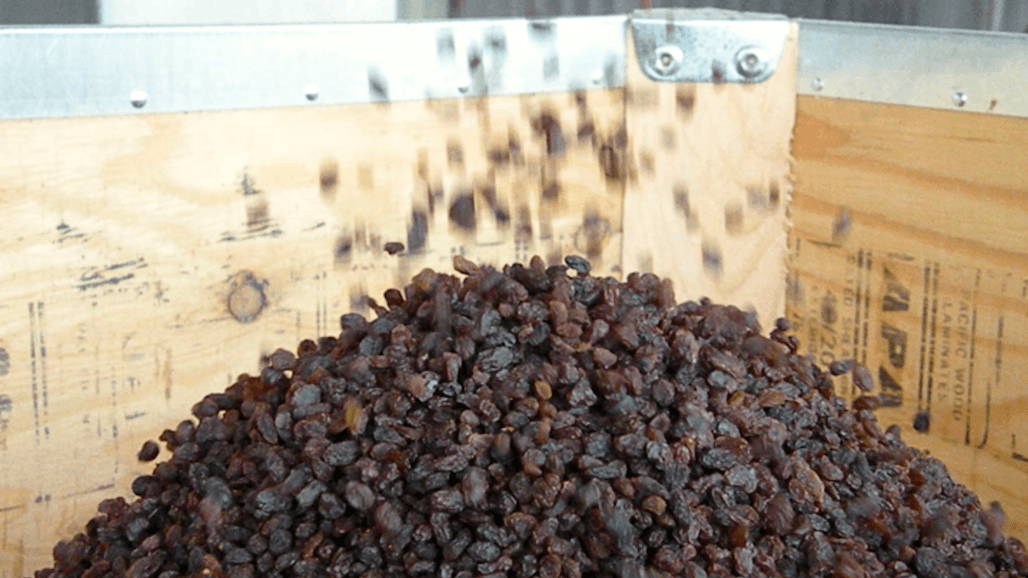
China’s raisin production is projected to rebound to 200,000 MT in MY 2025/26, recovering from the prior year when grape output was negatively affected by high temperatures. As the quality of Chinese raisins continues to improve, exports are expected to keep rising. Conversely, raisin imports are anticipated to decline further, a decrease attributed to increased world prices and retaliatory tariffs imposed on U.S. products.
Foreign Ag Service (FAS) China provides this reporting and analysis as a service to U.S. farmers, ranchers, rural communities, and agribusinesses in support of a worldwide agricultural information system and a level playing field for U.S. agriculture.
Production
Post estimates China’s raisin production to rebound by nearly 18 percent to reach 200,000 metric tons (MT) in marketing year (MY) 2025/26 (August-July). This recovery follows a reduction in fresh grape production during MY 2024/25, when high temperatures adversely affected fruit pollination in Turpan of Xinjiang, the largest producer of raisin in China. Shifting market dynamics are also contributing to the rebound in production. Industry sources in Turpan report that weak market prices for fresh grapes, particularly the Shine Muscat variety, in MY 2025/26 (see USDA GAIN Report CH2025-0220) have encouraged producers to divert more grapes toward raisin processing. The choice between processing and fresh consumption is a critical decision in Turpan, where the dominant Thompson Seedless grape variety can be sold as table grapes or processed into raisins. Producers tend to sell more grapes to the fresh market when table grape prices are high, and they shift grapes to processing when prices are lower.
The acreage devoted to grapes in Turpan remains relatively stable; however, grape production is highly reliant on specific weather conditions. While Turpan receives abundant sunlight, climate variations or disasters (e.g., sandstorms, extremely high temperatures, or unusual drops in temperature) can easily compromise the yield and quality of the grapes. Local media reports estimate the MY 2025/26 grape production in Turpan at 1.6 million MT. Typically, producers process about 70 percent of the fresh grapes harvested in Turpan into raisins. Xinjiang province accounts for approximately 95 percent of China’s total raisin production, and Turpan maintains its status as the single largest producing region within Xinjiang (see Figure 1).

The quality of Xinjiang raisins continues to show improvement in MY 2025/26, primarily due to upgrades in processing facilities, according to local raisin processors. Large food enterprises have increased investment in advanced processing equipment, focusing on cleaning, removing dust and stems, color separation, and packaging, to address consumer concerns regarding food safety and hygiene. Furthermore, smaller processors targeting the low-end market are adopting processing machinery to improve product quality while reducing labor costs. Turpan primarily produces two types of raisins: green raisins, which are produced by wind-drying grapes inside special drying houses, and dark raisins, which are made by sun-drying grapes directly on the ground. Both green and dark raisins require necessary post-harvest treatment, such as cleaning, before they are sold to food manufacturers or wholesalers. While the current ratio is estimated at 60 percent green raisins to 40 percent dark raisins, processors adjust this proportion based on market demand. Green raisins are typically consumed as snack food, while dark raisins are supplied to food manufacturers as ingredients. Processors in Turpan anticipate that strong demand from the world market will expand the share of dark raisins in MY 2025/26.
Advertisement
Stocks
Trade and industry sources indicate that raisin stock levels, primarily in Turpan, were very low at the start of MY 2025/26. Strong exports, coupled with a reduction in domestic production, led to reduced stocks. According to trade sources, an export boom had cleared almost all carry-over stocks, which were estimated at 5,000-10,000 MT at the beginning of MY 2024/25.
Price
Reduced domestic production and strong international demand pushed Chinese raisin prices higher at the start of MY 2024/25. Despite an increase in supply in MY 2025/26, sustained international demand has maintained elevated prices, especially for green raisins, according to local traders. According to Turpan raisin processers, wholesale prices for green raisins are currently RMB 15 ($2.1) per kg, compared to RMB 12-15 per kg last year. Prices for dark raisins have also increased by 10-20 percent year-on-year, reaching RMB 12 per kg. According to statistics released by Trade Data Monitor, LLC (TDM), the average export price for Chinese raisin rose by 13 percent compared to the previous year.
Consumption
In 2025, raisin consumption as a snack declined slightly, primarily due to rising domestic prices and increased consumer price sensitivity following the economic slowdown. Consumers responded by reducing purchases, opting for smaller snack packages, or substituting raisins with other dried fruits and puffed foods. At the same time, demand shifted toward health and nutrition, especially among younger generations, fueling interest in organic and additive-free raisin products. To address specific nutritional needs, the industry has developed specialty raisins, such as high-calcium varieties for the elderly and folic acid-fortified options for pregnant women. Raisins are also increasingly used as ingredients in a variety of foods, including baked goods, energy bars, tea drinks, and “daily nuts” mixes. Their role as a natural sweetener in products like whole wheat breadcrumbs continues to support steady demand from the food industry.
Trade
Advertisement
Imports
Post expects China’s raisin imports to further decline because of subdued domestic demand and significantly increased prices in the global market. According to TDM statistics, the price of imported raisins in China in MY 2025/26 have soared by more than 30 percent compared to the previous season. Uzbekistan remains the largest supplier, but China’s import volume has decreased dramatically in recent years. Imports of high-end raisins from Chile, which benefits from a bilateral free trade agreement, have remained relatively stable. Conversely, the United States, once a key supplier, is rapidly losing market share primarily because of retaliatory tariffs (see Chart 1).

Exports
Post expects China’s raisin exports to continue rising, a trend supported by improved quality and competitive pricing. Trade sources indicate that even though export prices have increased, Chinese raisins are still competitive in the world market. China exports primarily dark raisins to the world market. Buyers from Europe, Southeast Asia, and Australia seek Chinese dark raisins as food ingredients. China does ship a smaller volume of green raisins to Japan, the Middle East, and South Asia as snacks. Customs statistics demonstrate a major expansion in MY 2023/24, during which China’s raisin exports soared by 228 percent (see Chart 2). China filled a market gap resulting from a significant reduction in raisin supplies from Türkiye, the world’s leading supplier, whose grape production was and continues to be severely affected by mildew disease.

Policy
Advertisement
China has implemented several rounds of retaliatory tariffs against U.S. products, including raisins, since February 2025 (refer to USDA GAIN report CH2025-0164). On November 10, 2025, the Chinese government removed the 10 percent retaliatory tariffs imposed on certain U.S. agricultural products, including raisins, in response to the U.S. fentanyl tariffs (see USDA GAIN report CH2025-0209). However, the 10 percent reciprocal tariffs on all products from the United States remain in place. In addition, industry sources report that the Ministry of Finance has extended market-based exclusions from Section 301 retaliatory tariffs to December 31, 2026 (see USDA GAIN report CH2025-0223). This exclusion process has allowed importers to apply for exemptions from these tariffs since March 2020.
The following table provides detailed import tariff rates and value added tax (VAT) applied to U.S. raisins.

Marketing
Market indicators and production quality data suggest that the snack segment, especially for green raisins, dominates domestic consumption. The remainder is oriented toward processing uses such as baking, cereals, confectionery, and food manufacturing applications. Responding to consumer health trends, food manufacturers are developing new raisin-based products, including energy bars and gels marketed for fitness and wellness, emphasizing attributes like low sugar, high energy, and high potassium. The industry is also innovating with highly processed raisin derivatives, such as concentrated juice, powder, pectin, and extracts, which are used as natural sweeteners, flavorings, and functional ingredients across the food sector.
Leading retailers of raisin snack foods include prominent brands such as Be & Cheery (owned by PepsiCo), Three Squirrels, Hua Wei Heng, Bestore, Laiyifen, and Wolong. Many of these companies have introduced “daily nuts” product lines—packaged snacks featuring assorted nuts and dried fruits, including raisins. Distribution is increasingly multi-channel: traditional supermarkets, convenience stores, and specialty food wholesalers remain important for bulk and ingredient sales to bakeries and confectioners, while e-commerce platforms such as Taobao and JD.com continue to drive growth in packaged snack-style raisin sales. Raisins also remain a versatile ingredient, widely used in bakery products (bread, cakes, muffins), confectionery, breakfast cereals, yogurt toppings, energy bars, and trail mixes.
U.S. raisins are well known for their superior quality, and many upscale bakeries specifically choose them as ingredients. However, rising tariffs and supply chain instability have compelled some bakeries to switch to Xinjiang raisins. Even so, industry feedback indicates that, when circumstances allow, U.S. raisins remain the preferred choice for premium baked goods. Past industry efforts have shown that participation in high-profile industry platforms is effective to enhance brand visibility among key industry stakeholders, including bakers, and private sector buyers. Such engagement helps to strengthen brand recognition and supports long-term brand loyalty in the China market. — By USDA Foreign Ag Service China and Victoria Dokken