

As grape growers face a difficult grape market, a common question has been, if I do not use my property for grapevines as I had planned, what should I grow or how should I use my land? Now is the time to consider alternative uses of farmland for the benefit of the landowner and the ecological health of Oregon. Ecological land use programs are available through the Oregon Department of Fish and Wildlife (ODFW), Natural Resources Conservation Service (NRCS) and Soil and Water Conservation Districts (SWCD). Below are a few considerations for alternative land use.
Conserving native wildlife habitat. The ODFW administers several tax incentive programs, including the Riparian Lands Tax Incentive and the Wildlife Habitat Conservation and Management Program. The Riparian Lands Tax incentive is eligible to those with farm or forest zoned land that has riparian areas within it. The Wildlife Habitat Conservation and Management Program provides a tax benefit for landowners whose land is zoned for farm, forest, or mixed farm/forest, and it is available in most counties where grapes are grown. Landowners should contact their local ODFW office for more information on program availability and eligibility. The ODFW staff have technical expertise to help landowners develop a wildlife habitat plan that allows them to be successful in achieving tax incentives or grant program funds. These programs are best for long-term use of the land. Landowners are advised to contact ODFW before contacting the tax assessor, as programs are based on the tax year, and enrollment is due by April 1.
Protect oak habitat. Conservation of oak habitat and wildlife supported by oak habitat is a significant focus of many ecological programs in Oregon. If you have property that contains oak habitat, it is best to work with ODFW and/or the SWCD. As an example, the Yamhill County SWCD has a Regional Conservation Partnership Program in place to restore upland habitats such as oak forests and prairies. The restoration includes understory treatments to remove non-native and invasive weeds to reduce competition with oaks and to introduce native plant species, many of which are pollinators. It is not possible to leave these areas untended, as this leads to invasive weed encroachment. Most of the oak groves are located on or near vineyards. There are many other projects operated by SWCDs, and their staff provide technical expertise to guide those projects and programs. Sometimes funding may be provided by the project or program, but other times landowners provide their own funding for conservation efforts. Contact your local SWCD to learn more about programs may work for your property.
Enhance ecosystem resilience. Growers who are considering removing vineyard blocks or who have large areas of unused land on-farm should consider adding biodiversity to improve farm resilience. This may include planting pollinator habitat, providing grazing lands for leased grazers, or constructing ponds that may be used for irrigation later. As an example, the NRCS in the Willamette Valley is developing pond creation workshops to provide information for interested individuals to understand how it works, where to place ponds for water capture and retention, and complete the required permitting. These ponds can be used for irrigation after a two-year validation period that requires the landowner show that the pond can store water, and the grower would need to get a water right. Find out about additional efforts that can be pursued by the NRCS and SWCD by contacting their local offices and working with them to develop conservation ideas. Local NRCS offices in counties can come together to write a cost-share program that can benefit vineyard landowners. To start this process, NRCS holds a “local worker meeting” to document interest. They then work with groups to write a Conservation Strategy and seek funding. Multiple counties can work together on a program if the needs and resources are similar across counties. The NRCS and SWCDs use the “local worker meetings” as a source of information for future initiatives. Individuals who attend with specific concerns are likely to be heard—grower input on future initiatives is rare and highly desirable to these conservation groups. Check out the Programs and Initiatives page on the NRCS Work Group website for more information.
Frequently Asked Questions
• What to do if you are limited on time and funds? Contact your local NRCS/SWD or ODFW with your goals. They will provide expertise and advice. Formal ecological plans can be made and enacted, and they can connect you with preferred contractors to get the job done. Projects can be funded by the landowner or by federal funding pools, but the latter will require more time unless an active program is in place.
• Can landowners use multiple incentive programs? Yes, there is nothing prohibiting landowners from using multiple programs. Recognize that tax incentives do not provide funds for projects. If you need support for projects, work with SWCD/NRCS to secure funds to get the desired work completed on your site.
Advertisement
• I want to grow grapes–how do I start? There are always landowners interested in planting new, small acreage vineyards. However, these small acreage landowners should be advised of other options that are likely more profitable than if the land was farmed. We encourage vineyard developers, management companies, and county Extension faculty to share information about ecological programs broadly as clients come forward interested in planting new vineyards or removing current vineyards.
Thinking of other uses of vineyard land has many benefits for current and future producers and the wine industry at large. Oregon is known for its eco-friendly wine brand, and considering options to improve biodiversity instead of planting more vineyards or minimally farming blocks may be the next best step forward. — By Dr. Patty Skinkis, Professor & Viticulture Extension Specialist, Oregon State University.
Article By
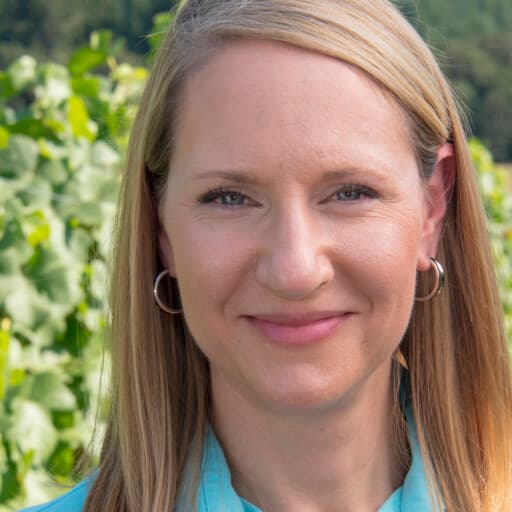
Patty Skinkis
Professor, Viticulture Extension Specialist, Oregon State University
Patty Skinkis is a professor and viticulture extension specialist at Oregon State University, and a member of the core faculty of the Oregon Wine Research Institute. Her research program covers whole-plant physiology - vine vegetative vigour management, the physiology of vine balance, and how vineyard management decisions carry through to fruit composition and wine quality - alongside work on yield and canopy management, fruitfulness and sustainable production. As extension specialist she develops educational programmes and publications for the Oregon industry statewide, including technical groups that bring university researchers and industry members together to exchange new results.