
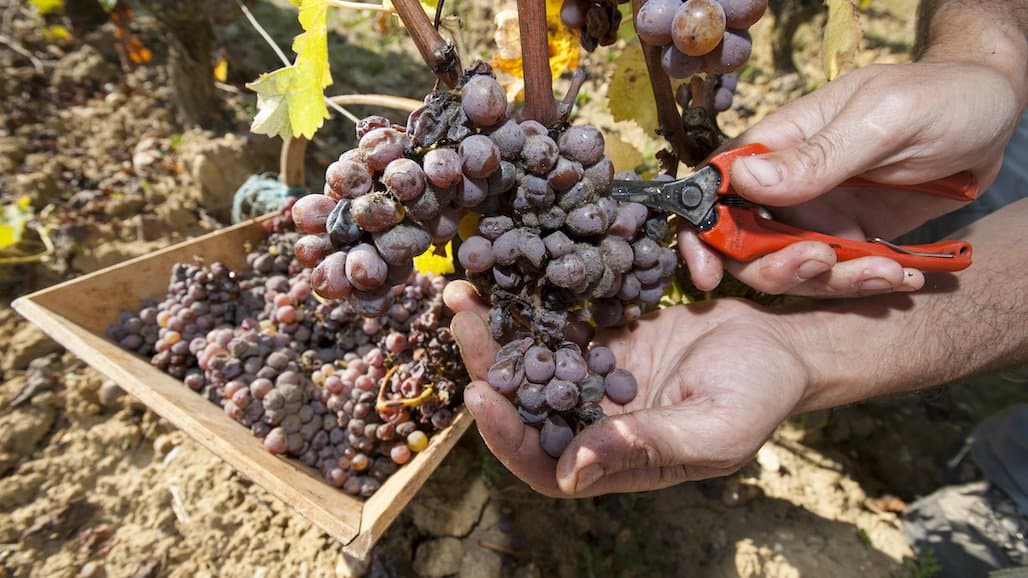
Botrytis is a rather poor pathogen because it needs external energy to infect a host. It can’t infect without it. This energy usually comes from dead organic matter or plant wounds. There are numerous wounds (petal and anthers scars) and dying organic matter (caps, petals, and anthers) that are a perfect energy source for Botrytis. Since botrytis spores are always floating around, every time there is a wound (e.g. flower petal scar) or dead flower part (stigma, anthers, caps), there is a chance of colonization of the organic matter, if conditions become favorable. A Botrytis spore can survive several weeks on plant surfaces in unfavorable conditions, waiting for the right conditions to germinate and colonize wounds or organic debris. These reasons are why bloom is such a critical period for bunch rot management. It is far better to get a protectant fungicide on these tissues before botrytis colonizes.
The warm, wet rains this past June likely resulted in a lot of colonized flower parts and wounds. If you have noticed more bunch trash this year, you should probably be concerned about bunch rot this fall. This bunch trash is likely colonized and will be the source of Botrytis after bunch closure. If we have fall rains and/ or a lot of berry push-off or cracking due to tight clusters or mildew pressure, then bunch rot will be coming.
The toolbox for management of Botrytis from this point in the season onward is limited to leaf pulling, cutting off shoulders, and fungicide applications around berry touch to bunch closer. Leaf pulling and fungicide applications have diminishing returns the closer to harvest they are deployed. Bloom sprays are still the most effective method of bunch rot management, particularly if leaf pulling occur before application.
There are some reported successes of shaking bunch trash out to reduce bunch rot using an airblast sprayer without water or a harvester to shake the vines. The return on investment for these practices is not clear since the literature shows a great deal of inconsistency in response versus the cost of application.
Fungicide resistance is also a consideration; our research has shown that there are some isolates tolerant to all the available conventional fungicide FRAC groups, thus fungicide rotation is critical. The most prudent practice is not to use a FRAC group more than once in a season. In addition, the fungicide group used at the end of the season last year should not be the first and probably not the second one used this year.
Biologicals may have their utility but the reports available indicate that they are rather inconsistent in performance, so they probably shouldn’t be used alone. This is also true of conventional fungicides. A multilayered approach of opening the canopy, reducing vigor, and timely application of protectants is the most effective means of reducing the chance of bunch rot.
So is botrytis coming? Well, it depends, but the risk right now is much higher than years past. The long-range forecast has September warmer but drier and October warmer and wetter. The drought conditions between now and then could also mean more aborted berries and other debris in the clusters. I would be hedging my bets and thinking more botrytis management than in past years is required. — By Walt Mahaffee, USDA-ARS Horticultural Crops Disease and Pest Management Research Unit, Corvallis,
OR